Design That Heals

Improving human well-being through

Thoughtful, Evidence-based Design

Latest Blog Post…

Picture

​In our previous discussion, we explored how zero-cost shifts in operational habits and end-of-day maintenance workflows serve as the foundational step in improving perceived cleanliness. However, when community healthcare providers want to advance beyond behavioral changes but face strict budget constraints, strategic, low-capital architectural upgrades offer a powerful next step.
For community-based and minority-group clinics, maximizing the impact of every dollar is an operational necessity. To minimize financial expenditures and eliminate operational downtime, these targeted recommendations are specifically chosen because they generally do not require a building permit in most municipal jurisdictions. However, healthcare leaders should always collaborate with their interior designers or architects to validate local requirements, as municipal authorities retain the right to enforce specific amendments to regional building codes, such as the California Building Code (CBC). When properly coordinated, implementing a few or all of these low-cost interventions can dramatically improve the clinical environment, reducing patient anxiety, elevating institutional trust, and supporting frontline healthcare staff.

1. Paint: The Chemistry of Coating and Color Selection

Picture

A fresh coat of paint provides an immediate visual reset, but in a healthcare environment, product selection requires balancing aesthetics with stringent functional performance. Standard commercial paints fail to withstand the rigorous chemical regimens required for clinical infection control or address modern environmental demands.

  • High-Performance Coating Specifications: To ensure absolute durability, specifications should mandate institutional-grade finishes engineered specifically for healthcare environments. In severe-exposure and high-moisture clinical spaces, Water-Based Catalyzed Epoxies must be utilized to create an exceptionally hard, tough, and durable surface that resists severe chemical stains, impacts, and scrubbing without surface degradation. For highly trafficked outpatient corridors and waiting spaces, advanced Scuff-Resistant Acrylics provide continuous defense against the physical impact of wheelchairs, carts, and gurneys while allowing less frequent repaints, minimized downtime, and significantly lower lifetime maintenance costs.
  • Innovative Healthcare Technologies: Clinic upgrades should leverage specialized architectural coatings to actively improve indoor biosecurity and environmental safety. This includes specifying EPA-registered Microbicidal Paints that continuously kill up to 99.9% of specific harmful bacterial pathogens (such as Staph and MRSA) on the painted surface within two hours of exposure, providing an ongoing layer of defense between routine cleanings. To ensure continuous protection, a strict maintenance and repainting protocol is required every 2 years to preserve the surface and the microbicidal integrity of the coating. Note that microbicidal formulations must be applied via brush or roller and cannot be sprayed. Additionally, integrating Odor-Eliminating Coatings actively reduces ambient chemical or clinical odors and airborne VOCs, helping maintain overall fresh indoor air quality.  However, it does require to be repainted every 2-3 years to maintain its effectiveness.
  • Environmental Sustainability and Certifications: To protect vulnerable respiratory patients and support healthcare equity, all products must feature low- or zero-Volatile Organic Compound (VOC) profiles. Sourced coatings should be backed by rigorous 3rd-party environmental safety verifications, such as GREENGUARD Gold certifications, Environmental Product Declarations (EPDs), and Product Lens Assessments (PLAs), ensuring transparent reporting of material ingredients and full compliance with regional indoor emissions goals (such as LEED EQ credits).
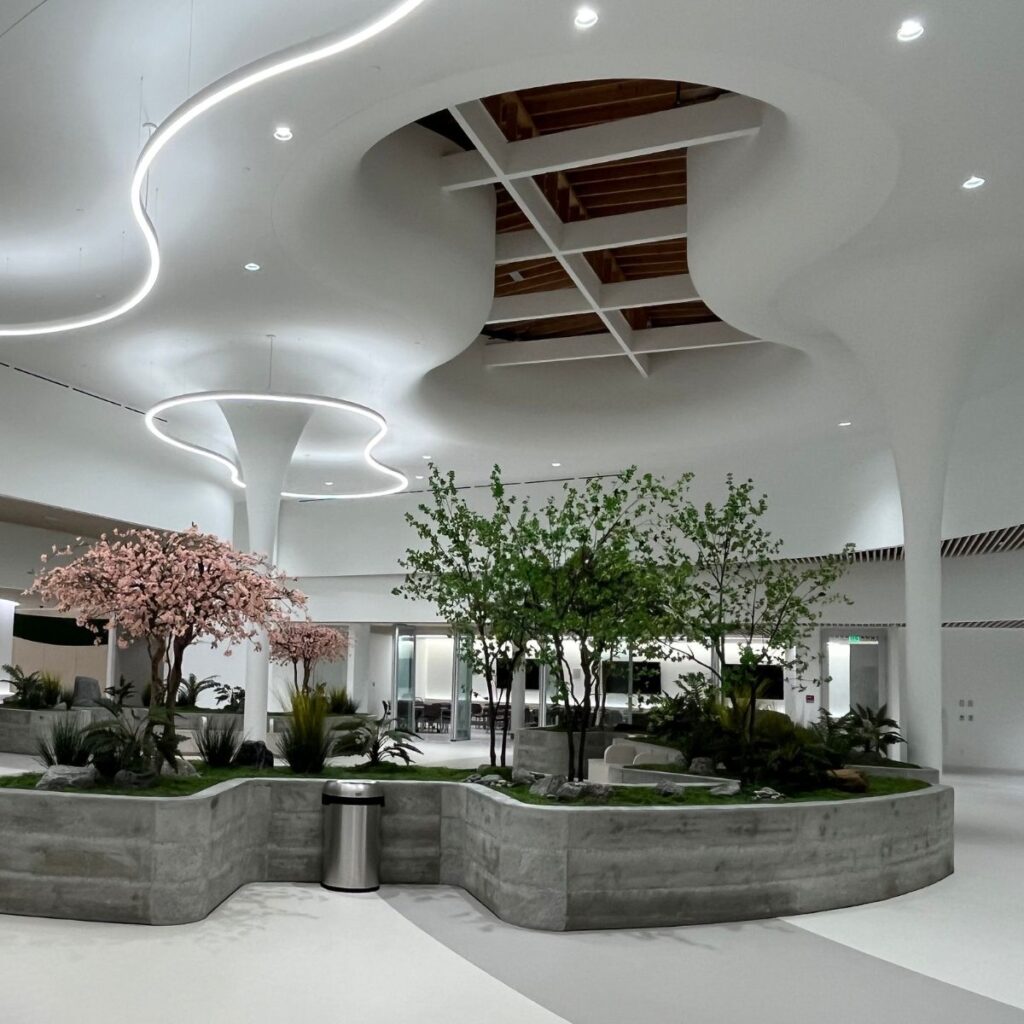
  • Color Psychology: Color selection must move beyond subjective choices to embrace evidence-based design principles. Aesthetically pleasing environments are directly associated with higher perceived quality of care and lower patient stress levels (Becker & Douglass, 2008). Integrating evidence-based color palettes—such as muted biophilic greens, soft slate blues, or calming neutrals—can reduce physiological arousal and anxiety in waiting environments (Leather et al., 2003). Furthermore, because community clinics serve multicultural populations, color choices should be informed by research on how regional and ethnic backgrounds dictate visual perception. According to the Sherwin-Williams educational framework How Do Cultures Influence Color?, behavioral responses to a space are deeply tied to cultural experiences and traditional color associations. Designing palettes with an awareness of these diverse cultural preferences helps create an inclusive environment that establishes intuitive institutional trust, respect, and emotional comfort for multicultural patient groups.

2. Refreshing Millwork and Casewor

Picture

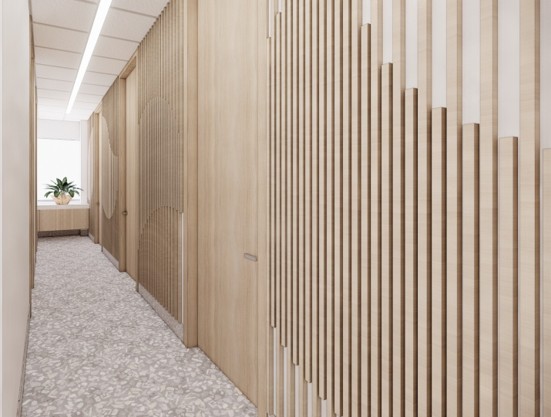
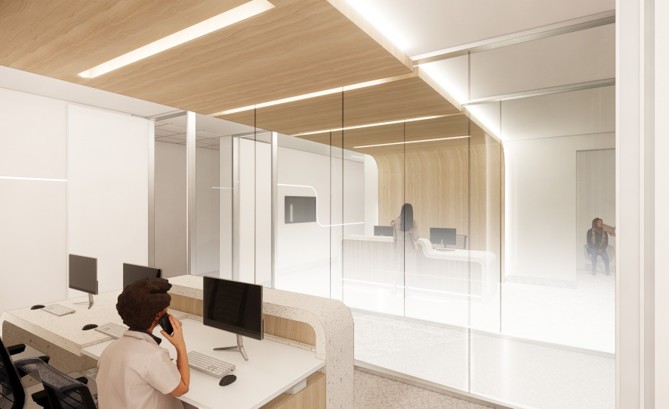
​​Replacing integrated cabinetry can easily trigger massive capital expenses and logistical disruptions. Instead, existing millwork can be structurally refreshed. Upgrading worn surfaces with durable, non-porous architectural laminates or replacing damaged solid-surface countertops instantly restores a hygienic appearance.


3. Evidence-Based Art and Environmental Graphic Design (EGD)

Picture

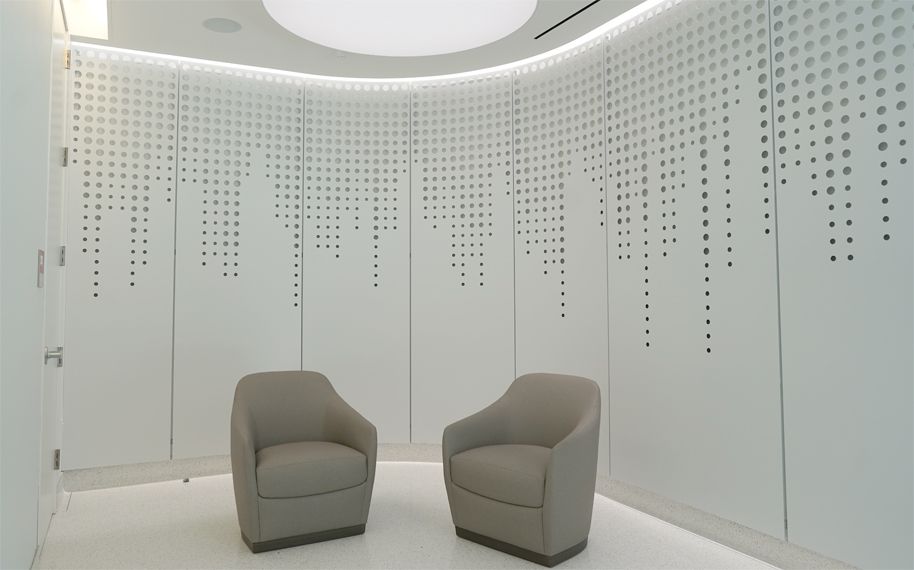
Empty, clinical walls can inadvertently increase a patient’s event-related anxiety. Introducing intentional artwork and Environmental Graphic Design (EGD) provides an effective, low-cost “pleasant distraction” that shifts a patient’s focus away from clinical stress (Etchegaray et al., 2006).

  • Biophilic Imagery: Content selection is critical. Research consistently demonstrates that representations of nature—such as landscapes, flora, and gentle water elements—provide measurable restorative benefits, whereas abstract art can sometimes increase confusion or anxiety in stressed populations (Leather et al., 2003).
  • Wayfinding Integration: EGD can double as a passive wayfinding system. Clear, culturally sensitive graphic markers improve navigation, reducing spatial friction and lowering cognitive stress for minority and diverse patient populations as they move through the facility.

4. Strategic Furniture and Textile Selection

Picture

Waiting room furniture is a primary touchpoint for patient evaluation; worn or stained seating severely undermines an institution’s perceived clinical capability.

  • Materiality: When updating furniture on a budget, prioritize replacing textiles over entirely new frames where possible, or select high-utilization replacement seating featuring wipeable, non-porous, and PVC-free polyurethane or silicone fabrics. Avoid traditional vinyls or woven fabrics that trap allergens, trap moisture, or degrade under harsh disinfectants.
  • Acoustic and Spatial Layout: Arrange furniture to optimize privacy and support personal space, which directly enhances a patient’s perceived environmental quality (Fornara et al., 2006). Using cleanable privacy screens can serve as dual-purpose space dividers and acoustic dampeners, breaking up direct lines of sight and reducing noise transmission in crowded waiting areas.

5. Floor Coverings: Targeted Intervention

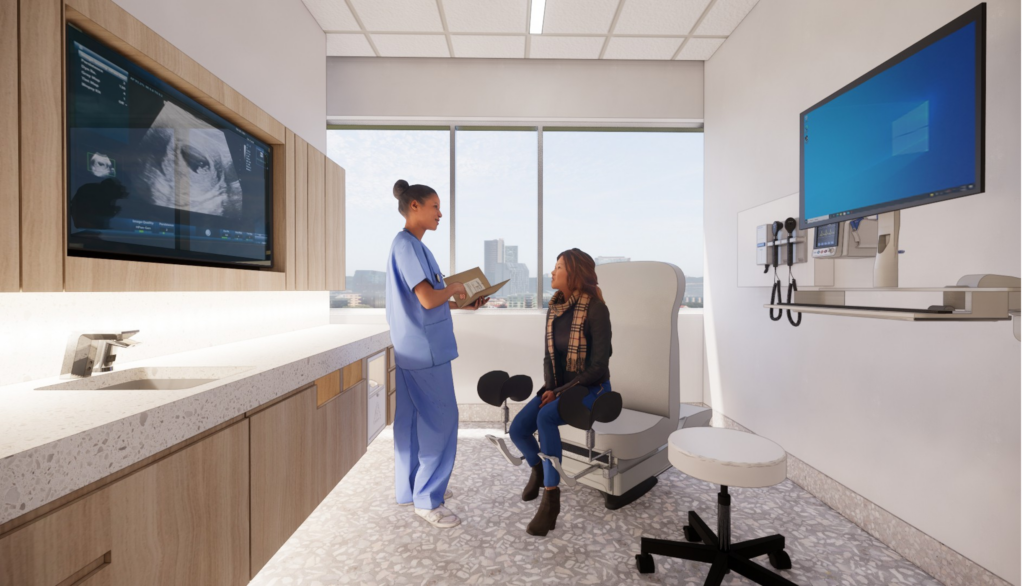
​While flooring replacement is a capital-intensive project that can disrupt operations, targeted updates provide significant returns. Focus budget allocations exclusively on high-impact zones, such as replacing damaged vinyl composition tile (VCT) in the immediate entry area or upgrading to easily cleanable, non-porous, sustainable, resilient flooring in specific exam rooms. This targeted approach rectifies trip hazards, addresses universal design accessibility needs, and eliminates cracked seams where pathogens collect (Guevara, 2021).

6. Re-Lamping: Transitioning to Daylight LED

​Lighting is a core pillar of environmental psychology, directly influencing mood, orientation, and spatial perception. Replacing outdated, flickering, or yellowing fluorescent tubes with high-color-rendering daylight LEDs is a highly cost-effective upgrade. Proper ambient and task lighting eliminates institutional gloom, visually opens confined spaces, and helps staff precisely evaluate clinical indicators, thereby reducing diagnostic errors and boosting workplace satisfaction.

7. Door and Hardware Upgrade

​Doors represent the literal transitions of the patient’s micro-journey. Worn doors, loose handles, or damaged frames detract from a clinic’s professional appearance. Replacing damaged doors or updating existing hardware to heavy-duty, antimicrobial matte finishes or lever-style handles improves touch-point hygiene, ensures compliance with physical accessibility standards, and enhances acoustic privacy between exam spaces.

Conclusion: The Cohesive Micro-Journey

​By properly coordinating a few or all of these low-cost recommendations, community healthcare clinics can achieve an environmental transformation that rivals expensive, full-scale remodeling projects. Elevating the physical environment does more than project an aesthetic impression of high-quality clinical care to patients; it actively sustains and respects the dedication of the community healthcare providers who work within these spaces daily.
To fully realize an optimized, seamless healthcare environment, a thorough spatial examination and structured capital renovation may eventually be required. In our next article, we will analyze the strategic concept of First Cost versus Life-Cycle Cost. We will evaluate how designing a neuroaesthetically sophisticated healthcare environment improves long-term operational efficiency, mitigates provider burnout, and demonstrates why a higher initial upfront investment ultimately protects and maximizes a community clinic’s operating budget over time.

Image Credits (Listed from top to bottom):

  1. NEMS, San Jose, CA – IA Interior Architects;
  2. NEMS, San Jose, CA – IA Interior Architects;
  3. NEMS, San Jose, CA – IA Interior Architects;
  4. NEMS, San Jose, CA – IA Interior Architects;
  5. NEMS, San Jose, CA – IA Interior Architects;

References & Evidence-Based Design Sources

  • Becker, F., & Douglass, S. (2008). The signs and symbols of hospitality in healthcare design. HERD: Health Environments Research & Design Journal, 2(4), 35-54.
  • Etchegaray, J., Fischer, W., Sisolak, J., & Lipka, S. (2006). Ambulatory care center design: Patient, staff, and physician satisfaction. Healthcare Design, 6(3), 8-10.
  • Fornara, F., Bonaiuto, M., & Bonnes, M. (2006). Perceived quality of healthcare environments: A scale for measuring the humanization of hospital care units. Journal of Environmental Psychology, 26(4), 321-334.
  • Guevara, J. (2021). Post-occupancy evaluation of universal design features in outpatient clinics. The Center for Health Design Knowledge Repository.
  • Leather, P., Beale, D., Santos, A., Watts, J., & Lee, L. (2003). Outcomes of environmental design in clinic waiting areas. The Center for Health Design Research Report.
  • Rehn, J. (2017). The architectural placebo effect: How design modifications influence patient health behavior intentions and clinical evaluations. The Center for Health Design Knowledge Repository.
  • Sherwin-Williams Company. (2022). How Do Cultures Influence Color? [Course Materials].

AI Disclosure & Transparency Statement
This article was developed with the assistance of an advanced language model (AI) to synthesize evidence-based healthcare design research, structure professional headings, and refine the technical architectural terminology. The underlying design philosophy, regional regulatory compliance considerations (such as the California Building Code), and community-centric focus on healthcare equity are rooted entirely in the 30+ years of professional practice, advocacy, and expertise of the human author.